
Business
Standardizing Calibration Workstations for Automated Quality Control

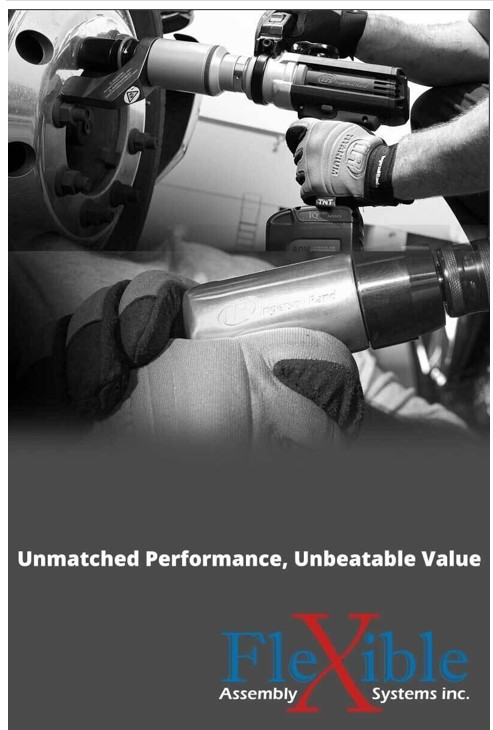
In modern heavy industrial manufacturing, absolute mechanical precision represents the definitive baseline for operational success. Production line supervisors wage a relentless daily battle against microscopic hardware deviations. When facility technicians utilize heavy rotational mechanisms to bind large structural components together, they rely entirely on the internal accuracy of those specific tools. If a mechanical mechanism falls out of its specified calibration limits, it will systematically destroy raw material batches or produce dangerously loose final products. To combat this severe industrial threat, facility engineers must completely standardize their internal quality control infrastructure. Establishing a dedicated, automated quality control workstation removes disastrous human variation and guarantees absolute procedural compliance across the entire manufacturing floor.
The Absolute Necessity of In-House Metrology
Metrology serves as the fundamental science of exact measurement. In an active production facility, you simply cannot blind-trust your heavy assembly equipment to maintain its absolute accuracy indefinitely. Internal metallic gears strip down, heavy compressed steel springs lose their tension memory, and repeated physical impacts alter internal sensor thresholds completely. Relying solely on basic annual maintenance shipped out to third-party calibration laboratories leaves your ongoing daily production vulnerable to massive localized failures.
Implementing a rigid, in-house metrology station allows your quality control personnel to intercept degraded equipment before it ever touches a viable consumer product. Instead of discovering a massive batch of improperly secured steel panels weeks after they pass down the line, a standardized daily testing protocol catches the microscopic torque deviation at the morning shift change. This proactive mechanical audit process saves massive amounts of capital otherwise lost to extensive consumer recalls, expensive scrapped materials, and severe reputational damage.
Isolating Measurement Precision with Digital Verification
You cannot verify a highly accurate digital assembly tool using basic analog guesswork. Quality control requires testing mechanisms that actually exceed the strict tolerances of your daily production hardware. To establish true baseline accuracy, facility managers must install dedicated Torque Testers at their central quality stations.
These sophisticated diagnostic devices utilize highly sensitive internal transducers. When a technician drives their suspect rotary tool directly into the testing receptor, the internal metal block inside the transducer twists imperceptibly. Highly advanced strain gauges bonded directly to this metal block measure that microscopic physical stretch. The testing unit immediately translates that physical material stretch into a highly precise digital readout on the master control screen. By comparing the intended output of the production tool against the absolute factual readout of the testing unit, supervisors can instantly determine if the hardware requires immediate internal mechanical adjustment or if it remains fully cleared for active factory floor duty.
Removing Human Biomechanics from the Audit Equation
While advanced testing units provide absolute numeric truths, the human technicians operating the diagnostic tests frequently introduce severe mechanical data corruption. If a quality control inspector manually holds a heavy industrial driver against the testing block, their human biomechanics alter the results. A slight angular lean introduces severe lateral shear forces against the delicate internal testing sensors. Pushing downward with inconsistent arm weight creates artificial friction bindings that register as false output readings.
To achieve a perfectly standardized calibration workstation, you must remove the human physical element from the mechanical testing cycle entirely. The diagnostic environment must replicate perfect geometric conditions every single time a tool undergoes a physical output audit.
Automating the Physical Test Execution
Engineers eradicate human testing errors by integrating highly precise automated propulsion platforms directly above the sensor receptors. By deploying sophisticated Linear Actuators to manipulate the suspect production tool, you generate a completely flawless testing stroke.
These automated mechanical carriages drive the tool downward onto the diagnostic receptor with absolute, unwavering perpendicular alignment. Furthermore, they apply the exact same downward pressure load throughout every single testing cycle. An electronic controller commands the linear mechanism to lower the tool, engage the drive bit perfectly vertical, and initiate the rotational cycle safely. Because the automated mechanism completely isolates the tool from human hand variations, the resulting diagnostic data represents the true, uncorrupted mechanical capability of your production device.
Comparing Diagnostic Methodologies
Evaluate the severe discrepancies between legacy manual testing environments and fully automated quality control architecture.
| Diagnostic Method | Alignment Consistency | Lateral Shear Risk | Audit Data Reliability | Diagnostic Method |
| Hand-Held Manual Testing | Highly Variable | Severe | Questionable | Hand-Held Manual Testing |
| Basic Bench Vise Mount | Moderate | Low | Acceptable | Basic Bench Vise Mount |
| Automated Linear Traverse | Absolute Perfection | Eradicated | Supreme | Automated Linear Traverse |
Transitioning to advanced physical traverse mountings guarantees that a tool passing a quality audit is genuinely perfect, rather than accidentally scraping by due to a flawed human testing motion.
Designing the Ultimate Testing Protocol
Once the physical standardized workstation achieves operational status, management must enforce unrelenting diagnostic schedules. A perfectly automated machine provides zero value if the active production floor technicians bypass the testing zone out of sheer laziness.
Mandate strict hardware verifications immediately upon the beginning of every single fresh working shift. Any heavy mechanism that accidentally impacts the concrete floor must instantly travel to the diagnostic lab for a full capacity sweep before it applies tension to another active product joint. Any device tasked with securing extreme high-liability structural frame components must endure intermittent accuracy validations every four hours without fail. Establishing comprehensive temporal routines protects standard facility output yields systematically.
Identifying Sensor Overload Parameters
Even the most advanced diagnostic sensors fail if subjected to kinetic violence beyond their structural design limits. Supervisors must carefully match the maximum threshold of the diagnostic receptor to the specific maximum output of the tool undergoing validation.
Subjecting a low-capacity digital sensor to the massive violent rotary impact of a heavy construction driver shatters the delicate internal mechanisms instantly. This destroys incredibly expensive analytical equipment and blinds your quality control operations entirely until you procure structural replacements. Maintain strict sorting bins separating heavy dynamic industrial drivers from delicate continuous electronic mechanisms, ensuring personnel only match appropriate production hardware to exactly scaled diagnostic base units perfectly.
Why Choose Flexible Assembly Systems?
Creating a genuinely flawless automated quality control laboratory demands supreme industrial integration expertise. Standard retail suppliers completely lack the deep engineering knowledge required to synchronize delicate metrology sensors with massive structural traverse platforms. We deliver absolute technical supremacy for total manufacturing floor overhauls.
Our specialized technical engineers evaluate your specific output metrics and design completely customized diagnostic environments tailored precisely to your raw hardware demands. Our vast inventory features the most durable and universally accurate digital measurement sensors available on the global technological market. We supply incredibly smooth mechanical traverse carriages that remove human contact variations permanently. Beyond simply shipping unparalleled physical structural components, our internal master calibration laboratory certifies every single diagnostic component we provide. Trust our dedicated logistical networks and unrivaled mechanical expertise to protect your continuous production quotas and elevate your absolute overall manufacturing quality significantly.
Final Assembly Review
Your final assembled structural product entirely relies on the hidden baseline accuracy of your invisible facility tooling network. Blindly hoping that mechanical rotation limits indefinitely hold true directly invites widespread catastrophic component failures. You must construct isolated, highly specialized quality control zones that leverage both supreme digital sensors and perfect mechanical traverse alignment. Eliminate raw physical human contact from the diagnostic procedure to achieve completely pure behavioral data. Integrating highly regulated testing methodologies guarantees flawless long-term production runs and entirely secures your vital operational reputation.

Tips on Getting the Most Out of Your Settlement

Standardizing Calibration Workstations for Automated Quality Control

5 Ways Healthcare Is Putting Patients First

The Ultimate Guide to MMA Shin Guards

The Hidden Reasons Behind Constipation

Which UK Visa Do You Need to Marry? Fiancé Visa or Marriage Visitor Visa

Essential Gear for New Beekeepers: Building Your First Apiary Kit

A First-Timer’s Guide to Exploring the Na Pali Coast by Boat

What Is Child Custody? A Legal Guide for Parents

Best Affordable Projector Buying Guide for Smart Home Entertainment in 2026

Nick Schmit? The Man Behind Jonathan Capehart Success

Christina Erika Carandini Lee: A Life of Grace, Heritage, and Privacy

Trey Kulley Majors: The Untold Story of Lee Majors’ Son

Jamie White-Welling: Bio, Career, and Hollywood Connection Life with Tom Welling

Api Robin: The Quiet Force Supporting Celeste Barber

Melanie Sergiev: The Woman Behind Drew Lynch’s Success Story

Linda Bazalaki — Life After the Crown, Miss Uganda 1993

Vera Davich: The Enigmatic Life of Scott Patterson’s First Wife

Kamiri Gaulden: What You Should Know About NBA YoungBoy

Talia Elizabeth Jones: Her Life, Parents, and Connection to Davy Jones
Tips on Getting the Most Out of Your Settlement
Standardizing Calibration Workstations for Automated Quality Control
5 Ways Healthcare Is Putting Patients First
The Ultimate Guide to MMA Shin Guards
The Hidden Reasons Behind Constipation
Which UK Visa Do You Need to Marry? Fiancé Visa or Marriage Visitor Visa
Essential Gear for New Beekeepers: Building Your First Apiary Kit
A First-Timer’s Guide to Exploring the Na Pali Coast by Boat
What Is Child Custody? A Legal Guide for Parents
Best Affordable Projector Buying Guide for Smart Home Entertainment in 2026
-
 Celebrity9 months ago
Nick Schmit? The Man Behind Jonathan Capehart Success
-
 Celebrity9 months ago
Christina Erika Carandini Lee: A Life of Grace, Heritage, and Privacy
-
 Celebrity9 months ago
Trey Kulley Majors: The Untold Story of Lee Majors’ Son
-
 Celebrity10 months ago
Jamie White-Welling: Bio, Career, and Hollywood Connection Life with Tom Welling