
Blog
The Fapdemic: Inside the Silent Digital Crisis Reshaping Motivation, Masculinity, and Mental Health in 2025


A quiet cultural shift is unfolding—one not debated on primetime news but deeply felt in classrooms, workplaces, bedrooms, and digital communities. Productivity is sinking, attention spans are fragmenting, and motivation—particularly among young men—is evaporating at an alarming rate. This shift has a name that sounds like a meme but reflects a real behavioral crisis: the fapdemic. Beneath the humor of its internet origins lies a complex and unsettling reality about digital-age overstimulation, dopamine exhaustion, and the psychological consequences of hyper-accessible gratification. The fapdemic isn’t about morality or censorship—it’s about a neurological economy spiraling out of balance.
Redefining the Fapdemic for the Digital Age
While the term “fapdemic” merges the slang “fap” with “epidemic,” its meaning extends far beyond compulsive sexual consumption. In 2025, researchers use the term to describe a broader digital feedback loop where endless online stimulation—visual, emotional, and algorithmic—rewires the brain’s pleasure circuits. The fapdemic is about instant dopamine: the infinite scroll, the swipe, the autoplay content. It’s about seeking comfort in an easy reward system while real-world motivation quietly decays. What began as online humor now stands as a sociotechnical phenomenon with real mental and behavioral consequences.
The Dopamine Trap: Why Modern Brains Are Overloaded
At the heart of the fapdemic is dopamine—the neurotransmitter of desire, craving, and pursuit. Historically, dopamine rewarded effort: hunting, building, learning, connecting. But in the digital age, dopamine is delivered on command. A swipe here, a tap there, a new video, a new notification—no effort required. Neurologists explain that humans are not equipped for this level of effortless stimulation. The fapdemic occurs when the brain becomes conditioned to expect reward without the friction that once made rewards meaningful. Over time, the dopamine system fatigues, leaving everyday tasks—studying, working, exercising—feeling dull and disproportionately difficult.
The Cultural Cocktail Behind the Fapdemic
The rise of the fapdemic isn’t an accident. It emerged from a perfect cultural storm. First, there is the loneliness epidemic, intensified by the lingering psychological effects of COVID-19. Millions live isolated lives, socially undernourished yet digitally oversaturated. Second, we have on-demand culture, where waiting feels obsolete. Entertainment, communication, and even relationships can be accessed instantly. Third is the shrinking male identity, where young men struggle to find direction amid changing social norms, fewer role models, and declining economic opportunities. In this climate, digital stimulation becomes not just a habit but a self-soothing mechanism.
The Neurological Fallout: How the Brain Changes During a Fapdemic
New research reveals that overstimulation physically alters the brain’s reward systems. Baseline dopamine levels drop, making normal activities feel unrewarding. Motivation becomes inconsistent or nonexistent. Executive function weakens, reducing self-control and decision-making. Many unknowingly enter a cycle of shame, stress, and compulsion, unable to understand why willpower alone isn’t enough. The fapdemic’s most damaging effect is invisible: it disconnects effort from reward. This split makes real-life challenges feel overwhelming, feeding anxiety, procrastination, and self-doubt.
The Productivity Paradox in 2025

Despite having unprecedented tools for creativity and success, many young people feel unproductive and apathetic. The fapdemic fuels this paradox by hijacking motivation at its source. When pleasurable digital stimuli are satisfying, predictable, and immediate, the brain naturally avoids difficult tasks that offer delayed reward. Online communities like NoFap and Digital Minimalism feature thousands of identical testimonies: brain fog, low energy, chronic procrastination, and the gut feeling of wasted potential. This isn’t laziness—it’s neurochemical depletion disguised as apathy.
The Mental Health Crisis Hidden in Plain Sight
The fapdemic intersects deeply with anxiety, depression, and self-esteem issues. Those caught in this cycle often report loneliness, social discomfort, and emotional numbness. Many suffer from anhedonia, a diminished ability to feel joy from ordinary experiences. Yet few recognize overstimulation as the cause. Psychologists increasingly link compulsive digital behavior with these symptoms, describing the fapdemic as a silent contributor to the modern mental-health crisis. Dr. Anna Lembke’s work on dopamine addiction underscores that the modern world has turned individuals into self-administering dopamine consumers—often without conscious awareness.
The Rise of the Reboot Generation
But there is a growing resistance movement. A new generation—often called the Reboot Generation—is rejecting overstimulation and rebuilding their lives from the ground up. These individuals track streaks, journal progress, practice mindfulness, lift weights, and engage in disciplined routines. Their transformations follow a predictable pattern: increased energy within weeks, renewed confidence by the first month, and dramatic improvements in emotional and social functioning by the three-month mark. Their stories offer a blueprint for recovery and demonstrate that neurochemical balance is both achievable and life-changing.
Technology’s Role and Responsibility
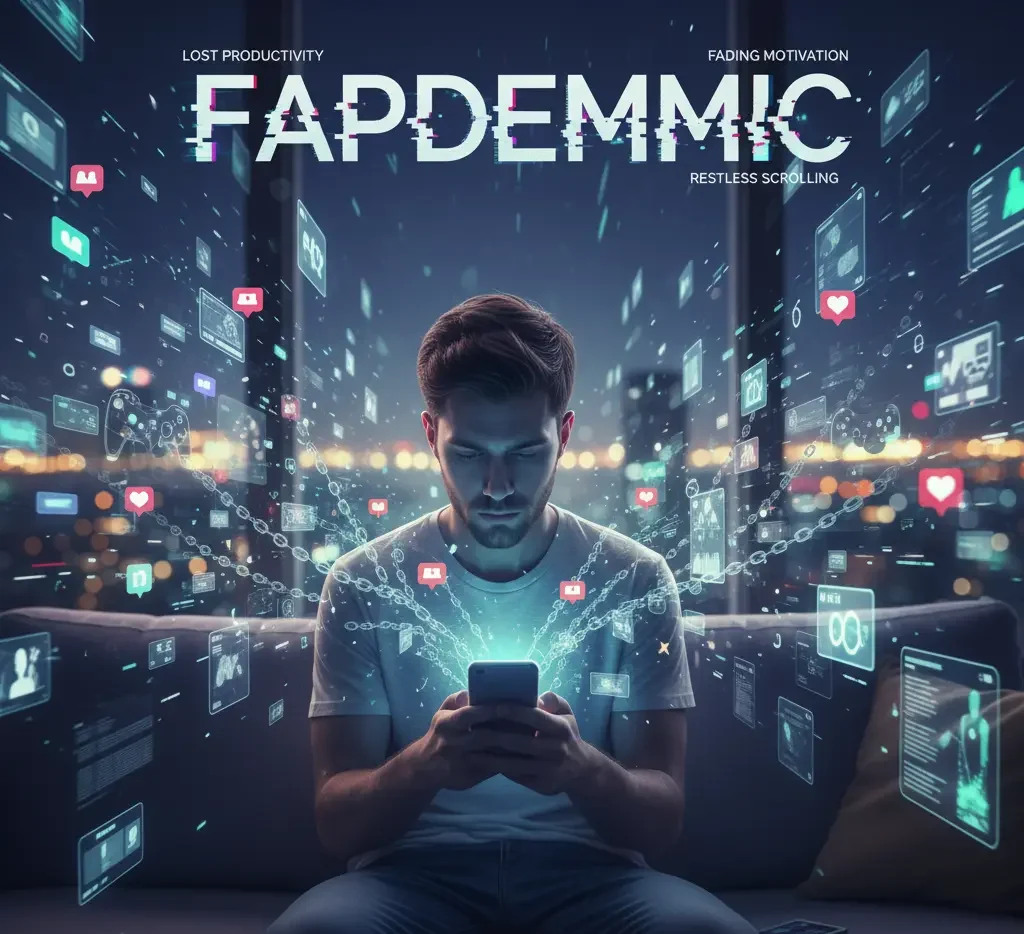
Big Tech occupies a central role in the fapdemic’s spread. Platforms optimize for engagement, not well-being. Their algorithms identify vulnerabilities and amplify them. While these systems weren’t built with malicious intent, their effects mimic behavioral manipulation. Critics argue that blaming individuals alone is misguided—expecting self-control in an environment engineered to undermine it is unrealistic. A real solution requires both personal responsibility and systemic reform: algorithm transparency, ethical design standards, and digital wellness features that protect users from compulsive loops.
Philosophical Roots: What Are We Actually Seeking?
Beyond neuroscience and culture, the fapdemic raises a profound existential question: What craving is truly being fed? Is it validation, escape, connection, or relief from loneliness? Modern life offers endless comfort but little meaning. It provides stimulation but not fulfillment. The fapdemic exposes a deeper spiritual and philosophical void—an imbalance between pleasure and purpose. To overcome it, individuals must redefine satisfaction not as something passively received, but actively earned.
Escaping the Fapdemic: A Practical Roadmap for 2025
Overcoming the fapdemic requires intentional, structured action. Start with input auditing: identify the triggers and digital habits that activate compulsive behavior. Then move to replacement, not mere removal—introduce challenging, meaningful activities that rebuild the reward system. Establish a streak to track momentum, the psychological fuel for sustained change. Build a community—online or offline—for accountability. Finally, embrace discomfort. Growth requires friction, and rewiring a dopamine-saturated brain means choosing discipline over ease repeatedly.
Why the Fapdemic Is a Turning Point for Modern Identity
The fapdemic represents more than a personal struggle—it is a cultural inflection point. It forces society to confront the consequences of limitless stimulation and declining purpose. It challenges men, in particular, to rethink identity, ambition, and emotional resilience in a world that no longer offers clear paths to meaning. But it also presents opportunity: a chance to rebuild healthier habits, stronger communities, and a renewed sense of personal agency.
Conclusion
The fapdemic is often laughed off, but its effects are anything but funny. It symbolizes the erosion of focus, motivation, and vitality in a world engineered for distraction. Yet its solution does not lie in guilt or repression—it lies in reclaiming attention, restoring balance, and pursuing goals that generate authentic fulfillment. When individuals shift from passive pleasure to purposeful effort, the fapdemic loses its power. This transformation is already taking shape across the Reboot Generation—and it will define the digital maturity of the decade ahead.
FAQs About the Fapdemic
1. What exactly is the fapdemic, and why is it considered a modern digital crisis?
The fapdemic refers to a widespread behavioral pattern shaped by the digital era, where individuals—especially young men—become stuck in cycles of instant dopamine gratification. Although the term originally emerged from internet humor, it now describes a real neurobehavioral phenomenon involving digital overstimulation, compulsive content consumption, and dopamine fatigue. The crisis stems from the fact that today’s technology delivers endless stimulation without effort, rewiring the brain’s reward system and weakening the motivation needed for long-term goals. What makes the fapdemic a modern crisis is its scale, subtlety, and alignment with global trends of loneliness, declining productivity, and rising mental-health challenges. It isn’t about moral judgment—it’s about recognizing how digital environments can hijack the human brain.
2. How does dopamine play a role in the fapdemic?
Dopamine is the neurotransmitter responsible for desire, anticipation, and reward. In a balanced system, dopamine motivates people to work toward meaningful objectives—finishing a project, exercising, or building relationships. But during the fapdemic, the brain becomes accustomed to fast, effortless dopamine spikes from digital stimuli. This causes dopamine desensitization, where normal activities feel unrewarding or boring because they require effort without immediate payoff. Over time, individuals may experience reduced motivation, difficulty concentrating, and a sense of inner emptiness. The fapdemic exploits the biological craving for stimulation, replacing slow-earned satisfaction with quick digital hits that ultimately drain the brain’s reward circuits.
3. Why is the fapdemic particularly associated with young men?
While the fapdemic affects all genders, its impact is disproportionately observed in young men due to cultural, psychological, and social factors. Boys and young men are more likely to retreat into digital worlds when facing uncertainty, loneliness, or a lack of purpose. Modern society offers fewer role models, less structured paths to adulthood, and fewer high-meaning community systems than previous generations. At the same time, digital content is more accessible and personalized than ever, offering young men an escape into predictable reward cycles. The fapdemic takes root when digital ease replaces real-world challenges, leaving many young men feeling unmotivated, isolated, and disconnected from their own potential.
4. What are the main signs that someone might be trapped in the fapdemic?
Common signs include chronic procrastination, declining motivation, difficulty focusing, emotional numbness, low self-esteem, and feeling “foggy” or mentally drained. Many individuals report that routine tasks—studying, working, exercising—feel disproportionately difficult, as if their brain is resisting effort. Social withdrawal is also common, along with feelings of embarrassment, shame, or frustration about not meeting personal goals. Importantly, the signs are not limited to one behavior; they represent an overall pattern of dopamine imbalance caused by excessive digital stimulation. People stuck in the fapdemic often sense something is “off” but can’t pinpoint the cause, making awareness the critical first step toward recovery.
5. How does the fapdemic affect productivity and long-term ambition?
The fapdemic disrupts productivity by hijacking the reward system. When the brain becomes accustomed to instant gratification, long-term goals—like learning new skills or building a career—lose their appeal. This is the productivity paradox: people have more tools than ever to succeed but feel less capable of sustained work. The fapdemic amplifies procrastination, saps energy, and reduces the internal drive required for big-picture achievements. Many report feeling stuck in cycles of wanting to improve yet lacking the motivation to act. Reclaiming productivity requires recalibrating dopamine, restoring discipline, and increasing real-world reward experiences.

5 Ways Healthcare Is Putting Patients First

The Ultimate Guide to MMA Shin Guards

The Hidden Reasons Behind Constipation

Which UK Visa Do You Need to Marry? Fiancé Visa or Marriage Visitor Visa

Essential Gear for New Beekeepers: Building Your First Apiary Kit

A First-Timer’s Guide to Exploring the Na Pali Coast by Boat

What Is Child Custody? A Legal Guide for Parents

Best Affordable Projector Buying Guide for Smart Home Entertainment in 2026

Bus to JB: Cheapest Ticket, Daily Schedule & Tips

The Legal Importance of Correct NADRA Records for Dual Nationals

Nick Schmit? The Man Behind Jonathan Capehart Success

Christina Erika Carandini Lee: A Life of Grace, Heritage, and Privacy

Trey Kulley Majors: The Untold Story of Lee Majors’ Son

Jamie White-Welling: Bio, Career, and Hollywood Connection Life with Tom Welling

Api Robin: The Quiet Force Supporting Celeste Barber

Melanie Sergiev: The Woman Behind Drew Lynch’s Success Story

Linda Bazalaki — Life After the Crown, Miss Uganda 1993

Vera Davich: The Enigmatic Life of Scott Patterson’s First Wife

Kamiri Gaulden: What You Should Know About NBA YoungBoy

Talia Elizabeth Jones: Her Life, Parents, and Connection to Davy Jones
5 Ways Healthcare Is Putting Patients First
The Ultimate Guide to MMA Shin Guards
The Hidden Reasons Behind Constipation
Which UK Visa Do You Need to Marry? Fiancé Visa or Marriage Visitor Visa
Essential Gear for New Beekeepers: Building Your First Apiary Kit
A First-Timer’s Guide to Exploring the Na Pali Coast by Boat
What Is Child Custody? A Legal Guide for Parents
Best Affordable Projector Buying Guide for Smart Home Entertainment in 2026
Bus to JB: Cheapest Ticket, Daily Schedule & Tips
The Legal Importance of Correct NADRA Records for Dual Nationals
-
 Celebrity9 months ago
Nick Schmit? The Man Behind Jonathan Capehart Success
-
 Celebrity9 months ago
Christina Erika Carandini Lee: A Life of Grace, Heritage, and Privacy
-
 Celebrity9 months ago
Trey Kulley Majors: The Untold Story of Lee Majors’ Son
-
 Celebrity10 months ago
Jamie White-Welling: Bio, Career, and Hollywood Connection Life with Tom Welling